
What is Industry 4.0?
Industry 4.0, often referred to as the fourth industrial revolution, refers to the integration of advanced digital technologies into manufacturing processes. This transformation includes automation, the Internet of Things (IoT), artificial intelligence (AI) and big data analytics.
The main objective is to create smart factories where machines, systems and products communicate with each other to make production more efficient, flexible and customizable. This evolution responds to growing demand for customized products and shorter product lifecycles, requiring production systems to become more adaptable.
Benefits of robotics and digitalization
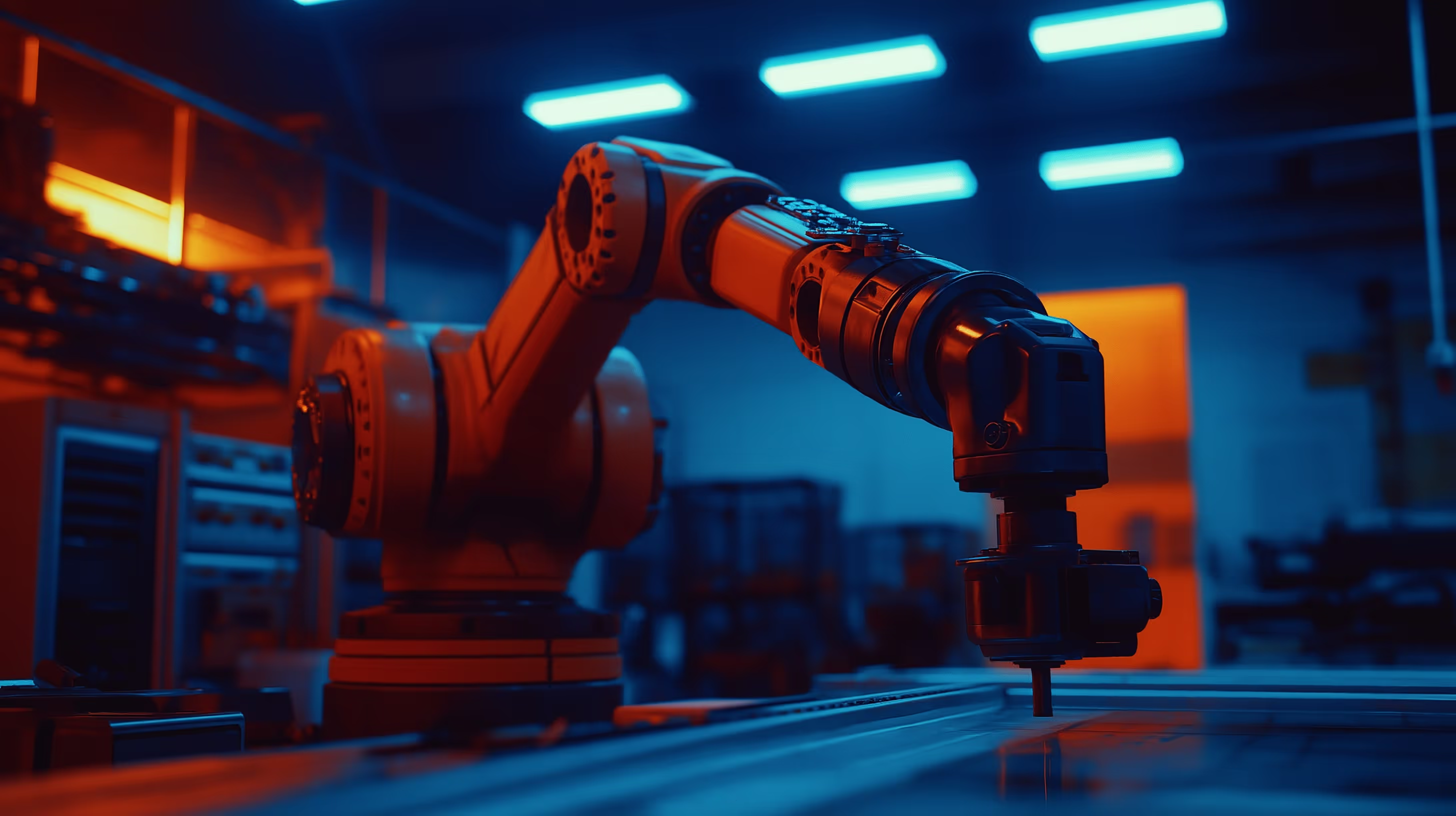
Robotics and digitalization offer multiple benefits for industrial companies. Industrial robots, for example, can operate 24 hours a day, reducing downtime and increasing productivity. They perform repetitive tasks with consistent precision, minimizing human error and improving product quality.
In addition, digitalization enables real-time monitoring of production processes, facilitating early issue detection and predictive maintenance. Analyzing the data collected can lead to continuous process optimization, reduced operating costs and better use of resources.
In short, these technologies enable businesses to respond more quickly to market fluctuations and customer needs, thereby strengthening their competitiveness.
Successful implementation
The transition to Industry 4.0 requires strategic planning and a gradual approach. It is essential to start with a thorough assessment of existing processes to identify the areas most likely to benefit from automation and digitalization. Pilot projects allow new technologies to be tested on a small scale before full deployment.
At the same time, employee training is crucial to ensure a smooth transition. Employees should be prepared to work alongside new technologies and develop skills in data analysis and automated systems management. In addition, a culture of innovation should be encouraged within the organization to support the ongoing adoption and integration of emerging technologies.
Conclusion
Industry 4.0 represents a major opportunity for industrial companies to modernize their operations and remain competitive in a constantly changing environment. By adopting robotics and digitalization, businesses can improve operational efficiency, deliver higher-quality products and respond more quickly to changing customer needs.
However, this transformation requires a strategic vision, a commitment to innovation and a willingness to invest in technology and training. Businesses that successfully complete this transition will be better positioned to thrive in the digital economy, both today and in the future.

